
The Future of DBaaS in an AI World: Vector Search, Hybrid Retrieval and Postgres
As SaaS evolves for AI, so must the database. AWS's Subbu Ramarao joins the panel to examine how AI-native workloads and agentic access patterns, vector search, hybrid retrieval, and unpredictable agent-generated queries, are reshaping the DBaaS landscape, plus the resurgence of Postgres and how BYOC and pricing pressures are changing managed data services.
Special Guests
Subbu Ramarao
Head of Worldwide GTM Specialists for Relational Databases at AWS, focused on Postgres, RDS, and Aurora for AI-era workloads.
Timestamps
00:00Introduction & Guest Introductions01:05Subbu's Role: Open Source Databases at AWS01:223 Disruptive AI Access Patterns Overview02:00Pattern 1: Vector Similarity Search at Scale03:15Pattern 2: Hybrid Retrieval (Vector + SQL)04:49Pattern 3: Unpredictable Agent-Generated Query Patterns06:30What Agentic AI Means for Database as a Service07:49When to Use Postgres vs. Vector Databases09:19Is Postgres the 'Operating System' for Modern Apps?11:10Why Startups Still Default to Postgres13:42Evolution of the DBaaS Market & Cloud Migration Trends16:35Billion-Scale Semantic Search & Legal Tech Example17:45Self-Manage or Use Managed DB Services?20:49Native AWS vs. Managed Services vs. DIY22:08Shifting Deployment Models: BYOC & Regulatory Pressures24:22How RDS/Aurora Addresses New Pricing & Agent Workloads26:51Database Savings Plan & Avoiding Engine Lock-in28:02Aurora Fast Cloning + Data Masking for AI Agents29:16Closing RemarksRelated Episodes

Episode 36: Data Consistency for AI: How ScalarDB Unifies Databases and Speeds Migration
Joe McCunney, CEO of Scalar Labs, makes the case that reliable, consistent data across environments is the hidden bottleneck for enterprise AI, especially in large organizations juggling 300+ database types. He explains how ScalarDB acts as a database-agnostic binder that connects multiple data sources and treats them as a single database, and how the company's open source refactoring agent generates architecture docs and migration plans that cut enterprise design time by up to 85%.
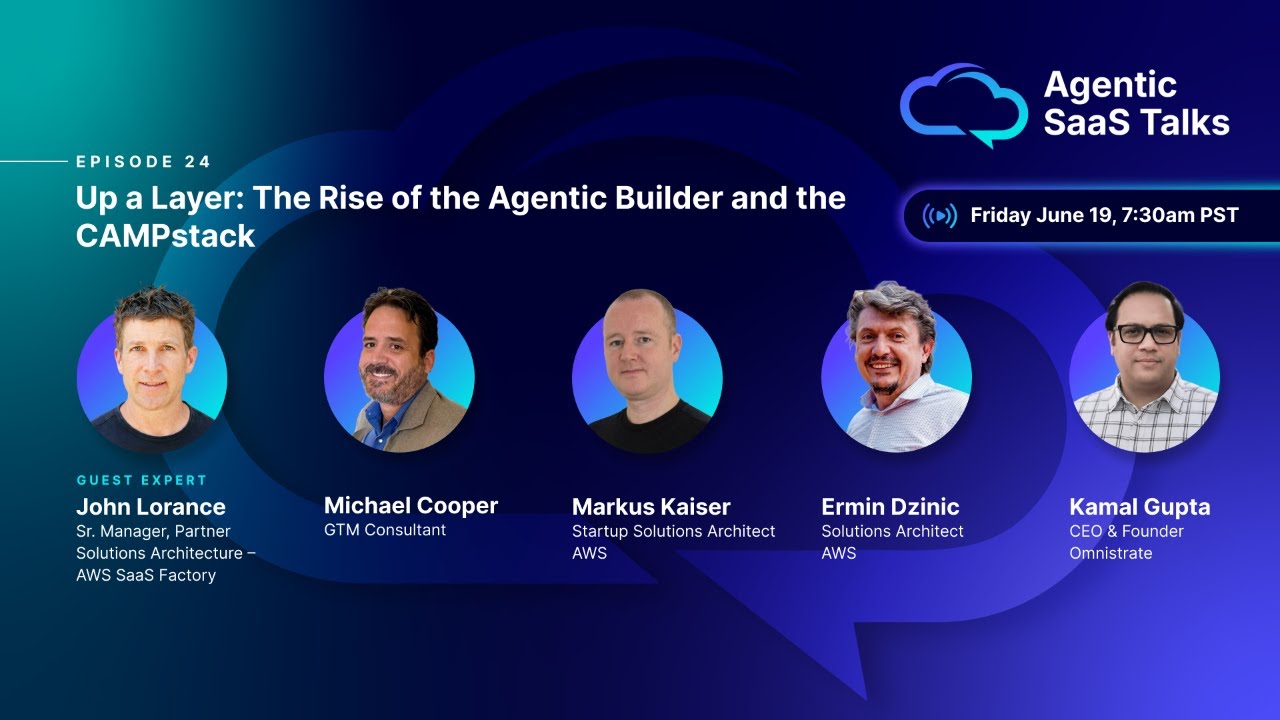
Episode 32: Up a Layer: The Rise of the Agentic Builder and the CAMPstack
The panel unpacks how builders are moving "up a layer", from writing every line of implementation to directing AI agents, composing managed services, and shipping faster on product judgment. They introduce the CAMP stack (Cloud, Agents, Managed services, Platforms) and dig into intent engineering, infrastructure control planes, the token economics of running agents 24/7, and why testing remains the hardest part of AI-generated code. Along the way they trace the shift from vibe coding to agentic engineering and ask whether AI will replace software engineers, junior ones in particular.
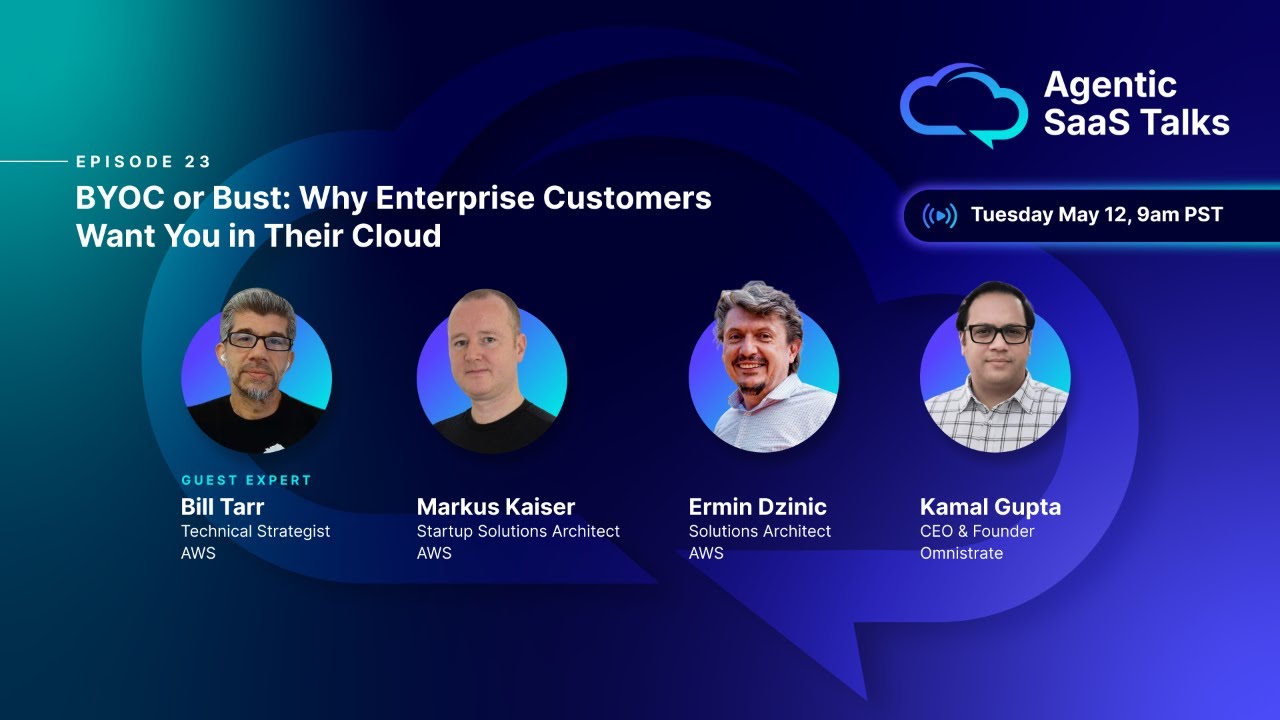
Episode 29: BYOC or Bust: Why Enterprise Customers Want You in Their Cloud
BYOC has shifted from a deployment option to a buying requirement. AWS solutions architects and Omnistrate's Kamal Gupta break down why enterprises now demand software in their own cloud, the security building blocks that make it work, and how agentic AI and data gravity are accelerating the move toward Bring Your Own Cloud.